Winter Crappie Fishing on Beaver Lake: Where to Start


 Published: Nov 25, 2026
 7 min read
Summary
A practical guide to winter crappie fishing on Beaver Lake, AR. It covers why deep structure takes over as the water cools and how slowing down helps, for beginners and experienced anglers alike.
Why the Fishing Changes When the Water Cools
Late November is when a lot of Beaver Lake anglers start asking where the crappie went. The answer is usually down. As the water cools through the colder months, fish settle toward deeper structure and stay close to it instead of roaming. If you keep fishing the same places you worked earlier in the year, you can go a long time without a bite.
That shift is the whole story of winter crappie fishing on Beaver Lake. Your job is to stop looking for fish and start looking for the places that hold them. Once you know what those places look like, the lake gets a lot smaller and a lot easier to read.
The Structure Worth Your Time
Four kinds of structure deserve most of your attention when the weather turns. Each one gives deep-water crappie something to hold on, and each one rewards a slightly different approach.
- Bluffs: steep rock walls that drop straight into deep water. Beaver Lake has plenty of limestone bluffs, and crappie hold along them at the depth they are comfortable with.
- Standing timber: trees still rooted in the lake bed. Fish tuck into the limbs and trunks, so the vertical profile matters as much as the spot itself.
- Brush piles: small, concentrated cover. A good one can hold fish when the open water around it holds none.
- Drop-offs: the edge where shallow water falls away into deeper water. Crappie use these edges as travel routes and as places to sit.
Notice that none of these is a wide-open flat. Winter crappie want something solid next to deep water. When you find two of these features close together, such as a brush pile on the edge of a drop-off, you have found a spot worth coming back to.
Reading Your Electronics Before You Fish
You cannot see most of this structure from the surface, which is why a good depth finder earns its place in the boat. Spend your first few minutes at a new spot just looking at the screen. You want to see the shape of the bottom, the cover on it, and any marks sitting in or just above that cover.
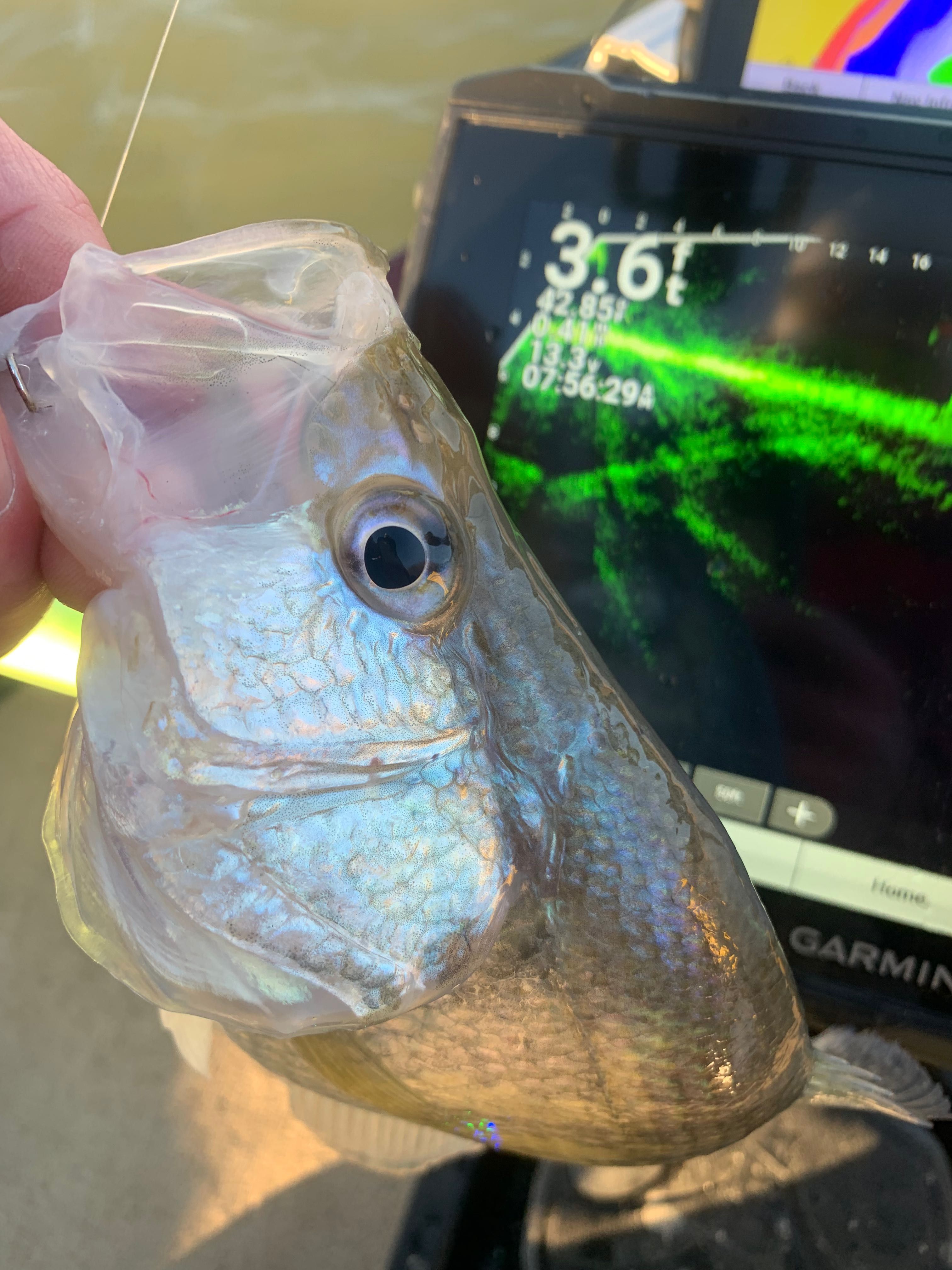
Fish that show up as arches or small marks tight to a brush pile or timber limb are fish you can work. Marks scattered over empty bottom are usually not worth the time. Learning to tell the two apart is a skill that pays off every time you leave the dock, and it is one of the things Lance coaches on guided trips, where guests learn to decipher live electronics and make small adjustments to reach fish.
Slow Down and Fish Precisely
Cold water changes how crappie behave. They hold tight, move less, and are slower to chase. A lure that rips past them fast is easy for them to ignore. A lure that sits in front of them and barely moves is much harder to refuse.
That is why precision beats speed in winter. Put your jig or bait directly in the strike zone, the narrow band of water where the fish are sitting. If your electronics show crappie suspended at a certain depth, get your bait to that depth and keep it there. A few feet too high or too low can be the difference between a quiet morning and a steady one.
Small adjustments matter. Change the depth a little, change the pace a little, and watch what the fish do. Patient jigging works well in these conditions because you can control exactly where your bait is and how long it stays there. If you are still learning the basics, fundamental jigging techniques are a solid place to start, and they are the same techniques Lance teaches aboard his boat.
A Simple Plan for Your First Winter Trip
If you are heading out on your own, keep the plan simple. Pick one area with a bluff or a drop-off nearby. Use your electronics to find cover on the deeper side of that edge. Fish each piece of cover slowly before moving on, and note where the marks sit so you can return to the same depth.
Do not spread yourself thin by jumping from spot to spot every few minutes. A handful of good locations fished carefully will usually out-produce a long list of places fished quickly. When a spot gives you a bite, stay and work it. Where there is one crappie there are often more.
It also helps to dress for the day. Winter mornings on a boat are cold, and a comfortable angler fishes more patiently. Patience is a real advantage when the fish are slow.
Fishing Beaver Lake With a Guide
Learning all of this takes time, and a lot of that time is spent not catching fish. A guide shortens the process. Lance Hughey Crappie Guide Service runs guided crappie trips on Beaver Lake, AR, with trips starting at Sonora Baptist Church. Lance fishes from a 19-foot fiberglass Ranger boat, and his trips are set up for both beginners and experienced anglers.
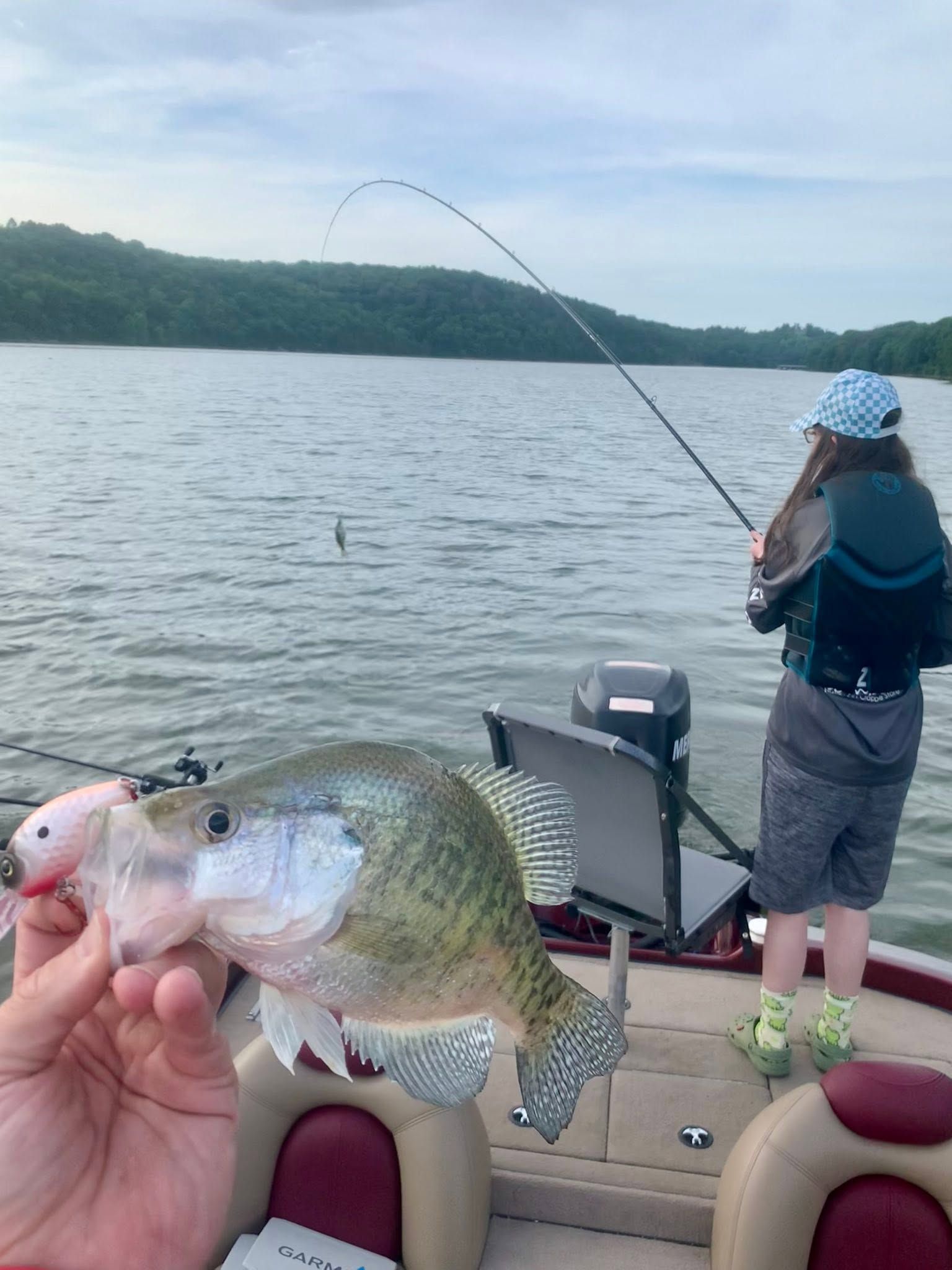
If deep structure is what you want to learn, Lance offers trips built around finding trophy slab crappie around timber, brush piles, and drop-offs. If you would rather have a relaxed day with patient coaching, there are easier-paced options with live bait too. Either way, you spend your day on the water with someone who knows where the fish are holding and why, and you leave knowing more than you did when you started.